Google Earth: An Illustrated History of the World

Robert Rosenberg recently emailed us to let us know about a very ambitious new project he’s working on, called the Illustrated History of the World. In his words:

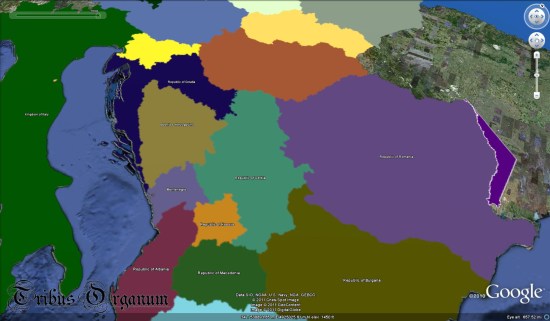
The IHW project is the Foundation’s effort to bring together existing multi-media web content such as Google Earth, You Tube, and Wikipedia in order to create an interactive narrative of world history based upon the content of our Tables of Instances.

tribus.jpg

If things go as well as they’re hoping, the result could be a very useful resource for teachers and students to help supplement their history and geography lessons.

As of now, the project is a bit cumbersome to load on your computer, as the main KMZ file is roughly 108MB! They’re already working on ways to reduce the size of that, likely putting it into a network link so it can be loaded in smaller chunks as needed. The other advantage to using a network link is that the data can be automatically updated, rather than requiring the user to re-download it from their site.

You can learn more on their website at TribusOrganum.org. They’ve also started a thread in the Google Earth Community to help solicit more feedback.

The Art of Maps: John Speed Atlas Online

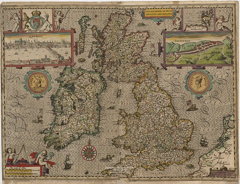
The Theatre of the Empire of Great Britaine (thumbnail)

John Speed’s atlas, The Theatre of the Empire of Great Britaine, first published 400 years ago, has been digitized and put online by the Cambridge University Library, which possesses one of only five sets of proof maps. (Zoomify format; Flash required.) Print copies for sale. News coverage from the Daily Mail; a gallery of Speed’s maps from BBC News.

The Art of Maps: Jean Baptiste Bourguignon- A general map of the World or terraqueous globe with…

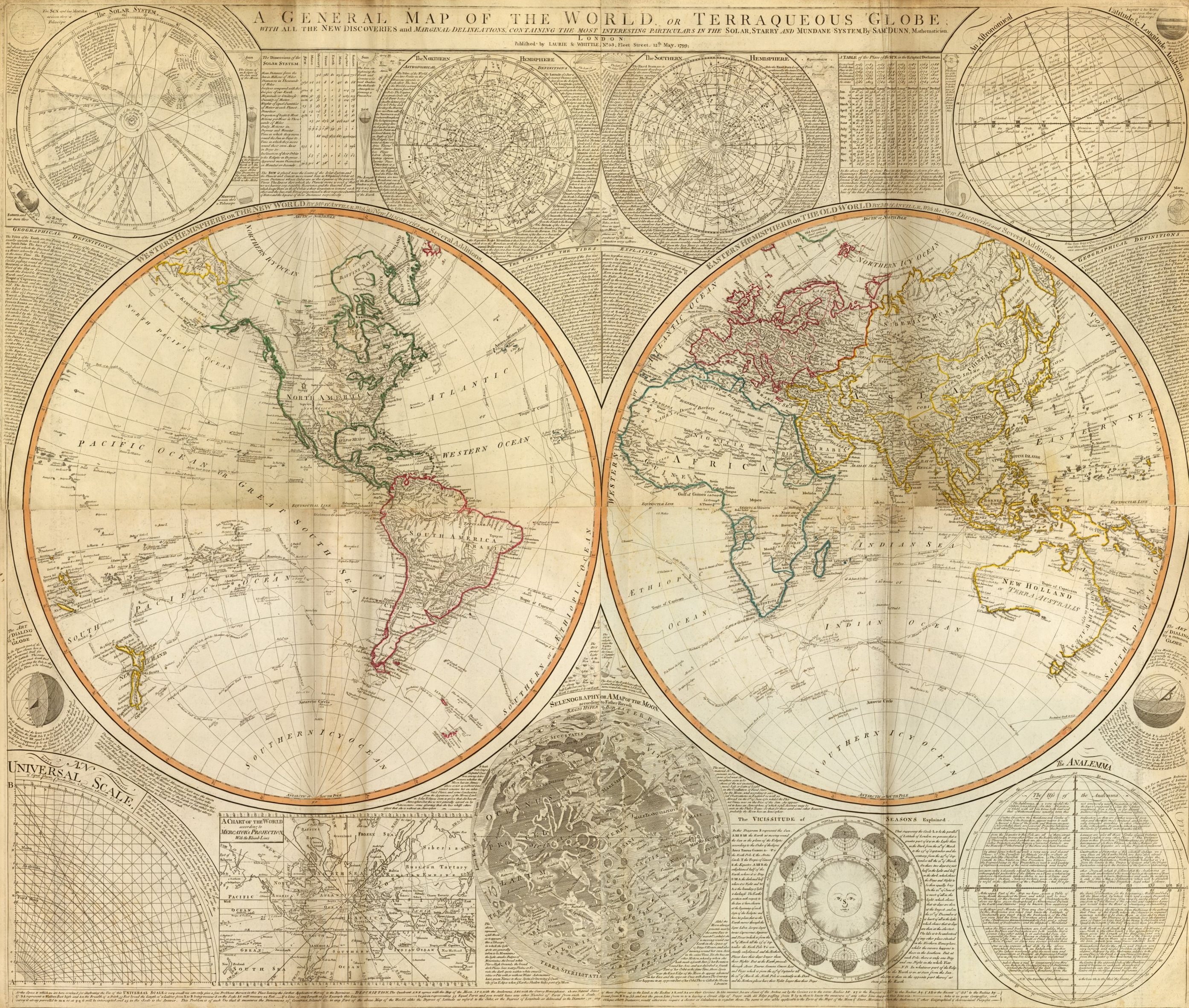
Jean Baptiste Bourguignon- A general map of the World or terraqueous globe with..
Author: Anville, Jean Baptiste Bourguignon d, 1697-1782; Dunn, Samuel; Riccioli, Giovanni Battista; Robert Laurie &
James Whittle
Date: 1799
Short Title: Composite: World.
Publisher: Laurie & Whittle London
Type: Composite Map
Obj Height cm: 105
Obj Width cm: 124
Scale 1: 43,000,000
Note:
Digital composite of north and south halves of hand colored engraved map. Relief shown pictorially. Contents: Western Hemisphere or the New World by Mr. d’Anville, with new discoveries and several additions — Eastern Hemisphere or the Old World by Mr. d’Anville, with the new discoveries and several additions. Ancillary maps or charts: The Solar System — The Northern Hemisphere — The Southern Hemisphere — An astronomical latitude & longitude analemma — An universal scale — A chart of the World according to Mercator’s projection, with the rhumb lines — Selenography or A map of the Moon according to Father Riccioli — The vicissitude of seasons explained — The analemma. Printed on 4 sheets; joined as 2.
World Area: World
Subject: Celestial
Full Title:
(Composite of) A general map of the World or terraqueous globe with all the new discoveries and marginal delineations, containing the most interesting particulars of the solar, starry and mundane system, by Saml. Dunn, mathematician. London, Published by Laurie & Whittle, No. 53, Fleet Street, 12th May, 1799.

Author: Anville, Jean Baptiste Bourguignon d, 1697-1782; Dunn, Samuel; Riccioli, Giovanni Battista; Robert Laurie &James WhittleDate: 1799Short Title: Composite: World.Publisher: Laurie & Whittle LondonType: Composite MapObj Height cm: 105Obj Width cm: 124Scale 1: 43,000,000
Note:Digital composite of north and south halves of hand colored engraved map. Relief shown pictorially. Contents: Western Hemisphere or the New World by Mr. d’Anville, with new discoveries and several additions — Eastern Hemisphere or the Old World by Mr. d’Anville, with the new discoveries and several additions. Ancillary maps or charts: The Solar System — The Northern Hemisphere — The Southern Hemisphere — An astronomical latitude & longitude analemma — An universal scale — A chart of the World according to Mercator’s projection, with the rhumb lines — Selenography or A map of the Moon according to Father Riccioli — The vicissitude of seasons explained — The analemma. Printed on 4 sheets; joined as 2.
World Area: WorldSubject: Celestial
Full Title:  (Composite of) A general map of the World or terraqueous globe with all the new discoveries and marginal delineations, containing the most interesting particulars of the solar, starry and mundane system, by Saml. Dunn, mathematician. London, Published by Laurie & Whittle, No. 53, Fleet Street, 12th May, 1799.

The Art Of Maps:
The Art of Maps: Map of Svecia and Norvegia from Atlas sive Cosmographicae by Gerardus Mercator (1595)

Atlas sive Cosmographicae by Gerardus Mercator (1595)

The Fleming Gerard Mercator (1512-1594) is rightfully regarded as the most important scientific cartographer of the Renaissance. With two contemporaries, the geographer Abraham Ortelius and the printer and publisher Christoffel Plantijn,he is considered the father of commercial cartography in the Netherlands.Even during his lifetime his maps, globes and atlases found their way all over the world.Mercator established his reputation mainly through his new projection method. The meridians and parallels are positioned at right angles to each other.If the distances between the meridians are equal, they progressively become larger between the parallels from the equator to the poles.This is why the latitude becomes wider the closer you get to one of the poles and why the part of the Earth in the upper latitudes exhibits excessive proportions.The advantage of this method was the far greater degree of certainty and accuracy in determining shipping routes.In 1585, Mercator published the first three parts of his own book of maps in one volume,which he called Atlas.The second edition appeared in 1589, with the addition of a fourth part. The first complete edition was compiled by his heirs in 1595 one year after his death.Walter Ghim,mayor of Duisburg the city where Mercator had lived for a long time,wrote the accompanying Mercator biography.It was the first time that a book of maps was referred to as an Atlas.Commercially speaking,however,the Atlas was not a success thanks to formidable competition from the Theatrum orbis terrarum by Abraham Ortelius,published in 1570,which by the end of the century had been reprinted more than twenty times.

The Art Of Maps:

The Art of Maps: Map of America from Atlas sive Cosmographicae by Gerardus Mercator (1595)
The Art of Maps: Europa Delineata juxta Obfervationes Excellorum – Vindel 1760
The Art of Maps: PIRI REIS MAP
The Art of Maps: Map of Europe from Atlas sive Cosmographicae by Gerardus Mercator (1595)
The Art of maps: John Speed: Asia with the Islands adioyning described, the atire of the people, & Townes of importance, all of them newly augmented . . . 1626
The Art of Maps:Johann Baptiste Homann [California as an Island]
The Art of maps:Matthias Quad – Map of North America 1593
The Art of Maps: Americae Nova Tabula
Sightseeing Map Locations Bulgaria
The Art of Maps: CORNELIS DANCKERTS Nieuw Aerdsch Pley MAP

The Art Of Maps: Orbis Terrarum Typus… auctore Petro Plancio 1594

Orbis Terrarum Typus De Integro Multis In Locis Emendatus auctore Petro Plancio 1594

Map Maker: Petrus Plancius

Place / Date: Amsterdam / 1594

Coloring: Hand Colored

Size: 23 x 16 inches

Description: This spectacularly decorative map engraved engraved by the Dutch master Jan van Doetecum holds the distinction of being the first world map to use a style of richly decorated border that would dominate world maps for decades to come. The elaborate borders were inspired by drawings in the works of Theodore de Bry published a few years earlier and established a pattern of cartographical decoration that lasted over a century. The map also has great importance geographically, particularly in the mapping of the Arctic and the Far East. The map contains a marvelous attempt at a North-West Passage, and Plancius himself instigated the three voyages of Willem Barents (1594-1597) into the area. He used this map to give cartographic encouragement to the Dutch crews by turning Novaya Zemlya into an island with open sea between it and the Arctic. A sprinkling of English names in the Canadian Arctic appear as a result of Frobisher and Davis’s explorations in search of the passage in 1576-1587. The map is also a landmark in the mapping of Asia and Japan. Plancius was one of the first Europeans able to penetrate the wall of secrecy surrounding the manuscript portolan maps produced by Spain & Portugal. ” Some of the most significant improvements include the first incorporation of Teixiera’s outline for Japan.. Ususal fold reinforcements, narrow margins and minor faults. Backed on archival paper. A visually stunning example. Shirley 187.

The Art Of Maps:

The Art of Maps: Map of America from Atlas sive Cosmographicae by Gerardus Mercator (1595)
The Art of Maps: Europa Delineata juxta Obfervationes Excellorum – Vindel 1760
The Art of Maps: PIRI REIS MAP
The Art of Maps: Map of Europe from Atlas sive Cosmographicae by Gerardus Mercator (1595)
The Art of maps: John Speed: Asia with the Islands adioyning described, the atire of the people, & Townes of importance, all of them newly augmented . . . 1626
The Art of Maps: Johann Baptiste Homann [California as an Island]
The Art of maps: Matthias Quad – Map of North America 1593
The Art of Maps: Americae Nova Tabula
Sightseeing Map Locations Bulgaria
The Art of Maps: CORNELIS DANCKERTS Nieuw Aerdsch Pley MAP