The University of Alberta

We’re big fans of 3D buildings and the realism that they add to Google Earth, and universities around the world are continuing to be the leaders in that area. Recently we showed you Terbuka University in Indonesia, and previously we’ve shown you excellent 3D campuses from Northeastern, the University of Wisonsin-Fox Valley, Central Florida and dozens of others.

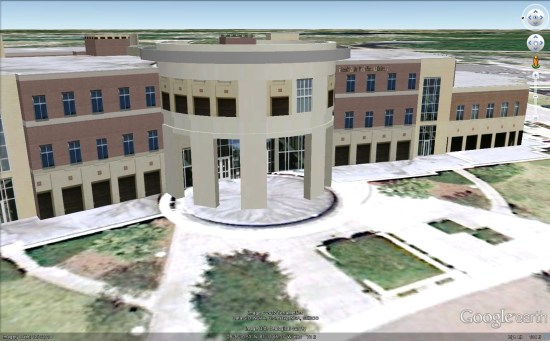
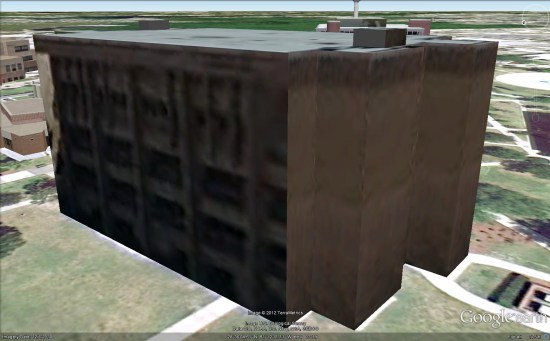
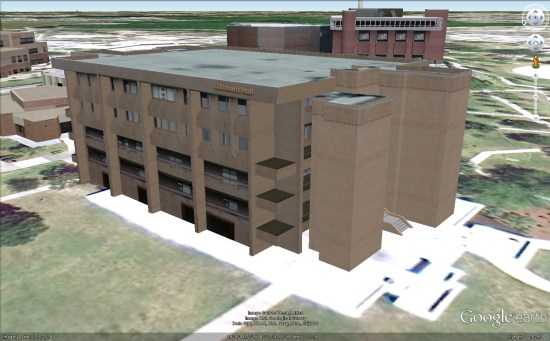
Today we’ll take a look at the University of Alberta. Lawrence Kwok emailed us to let us know that a team of himself and three other students (Max Amerongen, Matthew Hale and Veronica Krawcewicz) have modeled the majority of the campus, and it’s looking great!

u-a.jpg

While the buildings are looking excellent, they’re far from finished. This summer they’re working through an initiative to redesign the online campus map. While the map currently has quite a lot of data in it already, they’re hoping to improve the mobile experience.

To explore their 3D buildings for yourself, you can visit this page on Google Maps or download this KML file to fly directly to it in Google Earth.

via: GoogleEarthBlog
The Fusion Table data on mobile devices

We’ve talked a bit about Google’s Fusion Tables product before — a great way to turn a table full of data (such as an Excel spreadsheet) into a fully functional map!

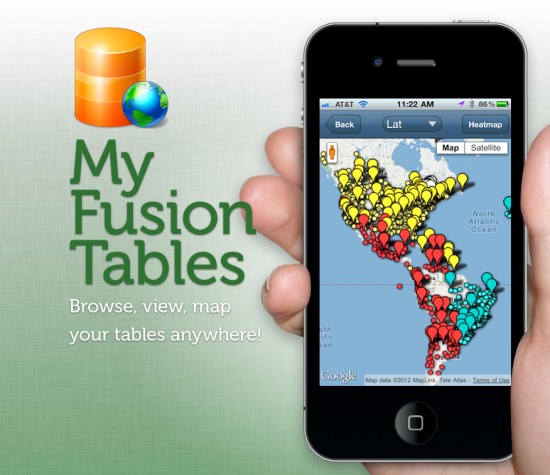
The maps can easily be shared through a Google Maps interface or even in Google Earth, but the mobile support for Fusion Table projects has been pretty weak. That’s where the folks from Build-A-Map have stepped in, with a new product called My Fusion Tables.

my-fusion-tables.jpg

My Fusion Tables a mobile application that allows you to browse, view, and map data from Google Fusion Tables on both mobile phones and tablets. You can find it in the iOS App Store or on Google Play.

The University of Central Florida 3D

As you certainly have seen by now, we love to show off awesome 3D buildings that our readers create. Recently we’ve shown you items such as the Evansville Central Library, the Costa Concordia and the Android statues at Google headquarters.

Today’s models come from Chris Sardinas at CS3Design. They’ve been working on modeling the campus of the University of Central Florida and they’re doing an amazing job with it.

One great example is the Health and Public Affairs Building, seen below. You can download it from the Google 3D Warehouse here.

health.jpg

Another excellent building is Colbourn Hall. This model already exists in Google Earth, though it’s fairly crude as you can see here:

colbourn-old.jpg

The new model from CS3Design looks far better!

colbourn-new.jpg

Many of their buildings are not yet in the default 3D layer in Google Earth, so they’ve put together a Warehouse collection to make it easy to find all of them.

The Google Earth Community


The Google Earth Community, formed in 2002 when Google Earth was still an independent product called “Keyhole”, has been an excellent resource for Google Earth users. Not only was the community a great place to post new files that you create/discover, but you could get answers to almost any Google Earth-related question in there.


bbs.jpg 

They even added a Google Earth Community layer to Google Earth back in 2005 to show off the great files that users have added, which you can still find under the [Gallery] section of your Layers.


layer.jpg 

Recently, the GEC had had some stability issues. Because it was based off of an older BBS technology, it was having increasing amounts of trouble under an ever-growing load. To fix that, Google is now moving it over to a Google Groups-based system which should help with those issues tremendously.

Right now Google is in the process of moving all of the posts and attachments to the new system. With more than 1.2 million posts on there, it’ll take some time. They’re hoping to have the data ported over by next week, and we’ll certainly let you know when it goes live.

If you have any questions or problems in the meantime, you can use the Google Earth forums already in place in Google Groups

via: GoogleEarthBlog

The Arctic Tern and the Sea Grapes


Last fall we showed you a great file from the people at Encyclopedia of Life that tracked Bluefin Tuna across the Atlantic. They’re back with a few new files that show how a type of sea algae (known as “sea grapes”) and Arctic Terns travel across the world as part of their annual migrations.


tern.jpg 

Ari Daniel Shapiro has worked with others, including Marie Studer and Eduardo Garcia Milagros, to put together some remarkable new tours. Ari’s background is in radio, so the audio narrative on the tours is excellent. Combine that with the images, video and Google Earth content and you’ve got a very engrossing and educational result.

The tours are available below, both in KMZ format for you to enjoy:

Sea Grapes Tour | KMZ


Arctic Tern Tour | KMZ


For more, you can view all of their tours on the Encyclopedia of Life site.