The new 3D cities on Google Earth for Android

Explorers of the world, rejoice! There is now a new way to explore the world, right from the palm of your hand. Gone are the days when the only way to get a bird’s eye, 3D view of your favorite metropolitan area was from the window of a penthouse apartment or helicopter. Now you can soar above your favorite cities in 3D, with Google Earth for mobile.


New 3D Imagery

We recently shared a preview of this striking new 3D imagery and starting today, you can take flight yourself with our latest version of Google Earth for Android. An updated version of Google Earth for iOS will be also be available soon.
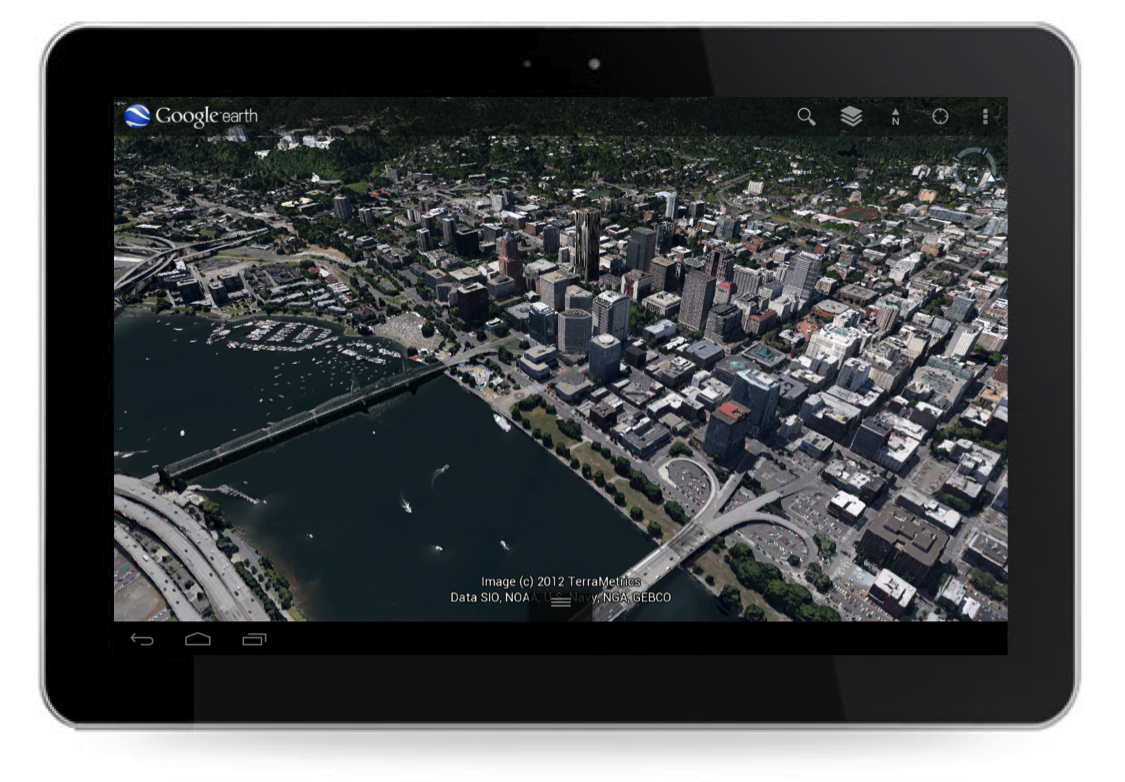


New 3D imagery of Portland, Oregon

Creating this comprehensive 3D experience is possible due to advanced image processing. Using 45-degree aerial imagery, we’re able to automatically recreate entire metropolitan areas in 3D. This means every building (not just the famous landmarks), the terrain, and any surrounding landscape of trees are included to provide a much more accurate and realistic experience.


Get started today by taking a virtual flight over one of our initial 3D imagery cities: Boulder, Boston, Santa Cruz, San Diego, Los Angeles, Long Beach, San Antonio, Charlotte, Tucson, Lawrence, Portland, Tampa, Rome or the San Francisco Bay Area (including the Peninsula and East Bay). We’ll continue to release new 3D imagery for places around the world over the coming months; by the end of the year, we aim to have new 3D coverage for metropolitan areas with a combined population of 300 million people.

Tour Guide

Not sure where to begin? Let the new tour guide help show you the way. We’ve put together short tours of thousands of famous places and historical sites across the globe so it’s easier than ever to discover amazing places. Just pull up the tab at the bottom of the screen to open the tour guide. Each image highlights a tours or place of interest in the area you are looking. Click on an item and you will be flown there. As you fly in and around the sites, snippets from Wikipedia provide additional information about the location. It’s like having a local expert right beside you!
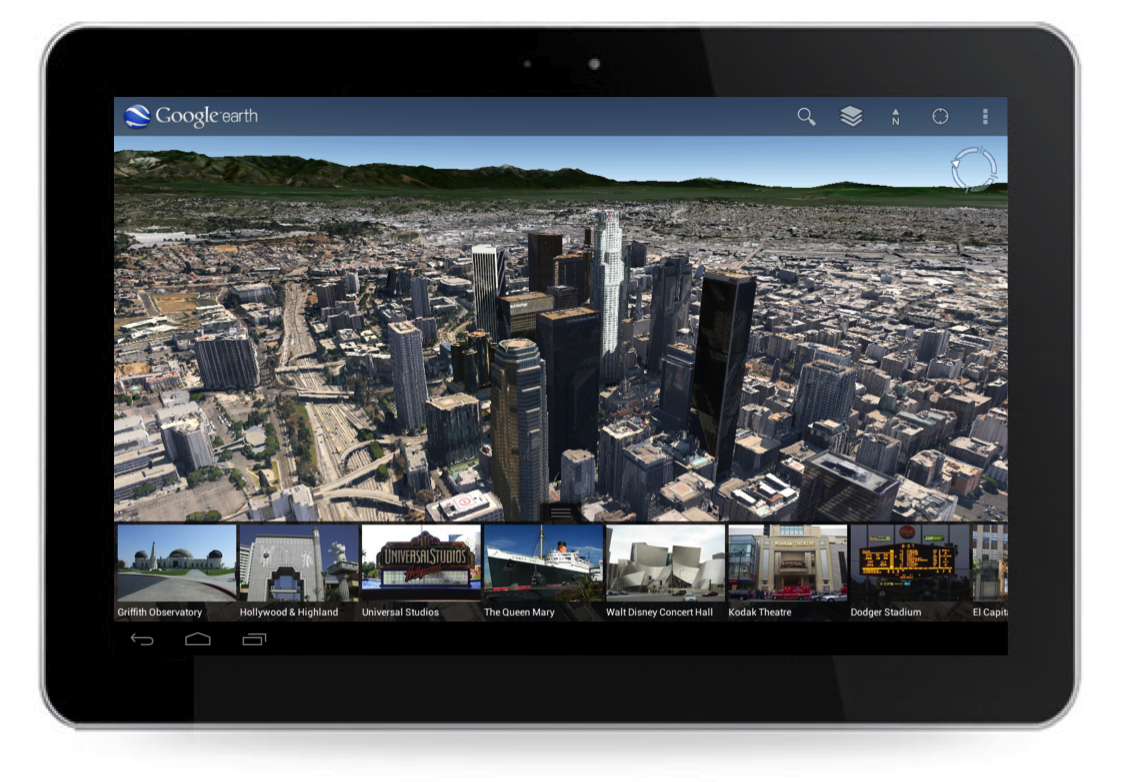


Tour guide showing top destinations around Los Angeles.

We hope this more accurate, comprehensive and realistic 3D representation of the Earth brings out the inner explorer in you. Whether you are visiting familiar grounds or venturing out into the world, Google Earth is there to show you the way.
New Google Shopper 1.5 for iPhone

We’ve recently made a few new changes to Google Shopper for iPhone that makes it easy to find nearby deals when you’re on-the-go.

In the latest version of Google Shopper, in addition to the ‘Shop’ tab, you’ll now see two new tabs at the bottom of the app: Offers and My Offers. The Offers tab displays a list, or map view, of nearby offers which businesses have submitted through Google Places – from restaurant and movie theater deals to discounts on tennis lessons or a round of golf.

Let’s say you come across an offer for free dessert at a nearby restaurant, but you won’t have time to use it until the weekend. You can save the offer for future use, then later view and redeem it from the My Offers tab.

Additionally, if Google Offers are available in your city, you’ll be able to view and redeem your purchased offers on the My Offers tab. Google Offers are currently available in Portland, Oregon, the San Francisco Bay Area and New York, with other cities to follow.
Google Shopper 1.5 is currently available for iPhone users in the US and UK with iOS 4.0 and higher. If you’re a current Google Shopper user, you’ll automatically receive an update. Download Google Shopper 1.5 by visiting the App Store. To download Google Shopper for Android, visit Android Market.

Garmin Montana Series


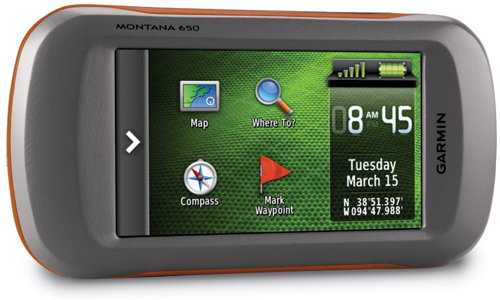
Garmin has announced the Montana series of GPS receivers, which seems to be an attempt to make an all-round, all-in one, GPS unit — i.e., it can be used on the trail as much as it can be used in the car.

Garmin’s previous attempt at a dual-use GPS, the nüvi 500 series, was a dashboard unit that doubled as a handheld; the Montana, on the other hand, is a handheld unit that comes with turn-by-turn directions. It resembles the Oregon, in that it’s a ruggedized touchscreen device, but is larger and heavier, with a four-inch, 272×480 pixel screen (the Oregon has a three-inch, 240×400-pixel screen).

The 600 is the base unit, the 650 adds a five-megapixel camera, and the 650t also adds preloaded topo maps. Available reasonably soon; MSRP ranges from $550 to $700 — which is to say, pricey. I can’t help but think that separate dashboard and handheld units might be a better option in most cases.

Announcing V1.1 of the “New” Map Style

A few months ago, we launched our new map style which provides a unique backdrop for information delivery and helps content “pop” on the map, allowing people to find what they are looking for more quickly.

The initial feedback was positive but we were given great constructive feedback – users appreciated the new style’s uniqueness and loved the clean, calm look; but, some felt it made aspects of our maps more difficult to read. Specifically, users were interested in:

1. City density – how many cities appear at each zoom level?
2. Street differentiation – can viewers tell which city streets are major and minor?
3. Color contrast – are different map components easily distinguishable?

We’ve updated our map style to reflect user feedback so it’s even easier for people to find where to go, how to get there, and what to expect along the way. Key changes are:

A. Increased city density while preserving a clean, visually appealing map
B. Clearer differentiation between major and minor city streets
C. Greater color contrast at the city-level so streets “pop” out more
D. Altered font sizes and contrast for crisper, less cluttered map labels
E. Improved highway shields for US and added new shields for 7 countries

Pictures are worth thousands of words though, so let’s jump into screenshots (or just head straight to Bing Maps to explore). It is difficult to distinguish the differences in these lower-resolution screenshots, so please click on the screenshots or text links to view the full-size pictures

————————————————————————————————————————————————–

Screenshots #1 & #2 – Zoom Level 5, United States Western/Mountain and Central/Eastern Zones
Key Differences:

  • · Increased city density to avoid large expanses of empty space and bring up cities people are likely interested in (See: Montana/Idaho/Utah/Wyoming/Dakotas in Screenshot #2 and Southeastern states in Screenshot #3)
  • · Added thousands of city labels in less populated areas while reducing overcrowding in the most densely populated ones. Also ensured that cities and state/province names do not overlap where possible to improve readability.

Bing Maps Style V1.1: Zoom 5, Western US Screenshot #1

Click to View Screenshot #2

_______________________________________________

Screenshots #3 – Zoom Level 16 Seattle
Key Differences

  • · This screenshot demonstrates a lot of the color contrast and brightness changes made at lower detail levels to differentiate among streets.
  • · Freeways (such as I5) had their color intensified by 200% and brightness increased by 5%. Major roads (such as 4th Ave) had their color intensified by 400% and brightness increased by 5 points. Minor roads (such as 1st Ave) had their color intensified by 200% and brightness increased by 5 points as well.

Bing Maps Style V1.1: Zoom 16, Seattle StreetsScreenshot #3

_______________________________________________

Screenshot #4– Zoom Level 4, United States
Key Differences:

  • · Sharpened the font for state/province names and country names to improve readability
  • · Reduced the information detail at this zoom for smaller countries to reduce clutter (See: Mexico and island countries in the Gulf)

Click to View Screenshot #4

_______________________________________________

Screenshots #5 – Zoom Level 6, Pacific Northwest United States

Key Differences:

Trailblazing in Portland


When we announced the availability of Hotpot last month, we knew from the beginning we were going to take a different approach to marketing the product and engaging with our users, both businesses and consumers.
To that end, we’re excited today to start testing this new approach by launching our first local marketing campaign in Portland, Oregon. Portland is a tech savvy, forward-thinking city with a history of innovation and some of the best coffee houses, microbreweries and parks in the country. Whether you know it as The City of Roses, Stumptown, P-Town, Rip City or just PDX, Portland’s thriving local business community and strong heritage of being a trailblazer made it a great choice for us to try something new.
So starting today and over the course of the next few months, we’ll be out and about in Portland. Here’s a taste of what’s in store:
Business Kits and Window Decals
Every day millions of people search on Google.com to find local businesses, and we want to make it seamless for standout businesses to get discovered online. To achieve this, we’ll be working directly with some of Portland’s top businesses to educate them about Google Places for business and all its benefits. In addition, to help these businesses spread the word, we’re providing owners with special Google Places Business Kits. These kits are a multi-flavored sampler of marketing materials that can help businesses get even more exposure, get them rated and reviewed online, and get more customers through their door. We’re already distributing these to some of Portland’s top businesses, but any business in Portland who has claimed their Place page can request a box.
A central part of the kit is the bright red “Recommended on Google” window sticker. This is not your ordinary sticker. Unlike others, this is an interactive sticker that has Near Field Communications (NFC) technology built right in, allowing people with cutting edge phones like the Nexus S to simply touch their phones to the sticker to find out more information about the business. Suddenly stickers are cool again!
Community Events
Sure, Hotpot’s about sharing recommendations with friends online. But we thought it’d be fun to take things offline. To kick things off, we’re partnering with Portland’s beloved Voodoo Doughnut. Because we at Google are such big fans of their tasty treats, we wanted to spread the love — so if you like doughnuts and coffee, be sure to stop by both locations starting this Saturday at 10am for a special treat.
Hotpot Jackpot
We’re also launching our second Hotpot Jackpot competition to encourage Portlanders to start rating the places they know and share them with friends and family. Everyone over the age of 18 who lives within a 50-mile radius of Portland can participate, and the top five raters at the end of the competition will win dinner for 10 at any restaurant in Portland, courtesy of Google. To kick things off, all of the fans at tonight’s Trail Blazers vs. Magic game will receive t-shirts announcing the competition and supporting the Blazers.
This is just the beginning and we’ll be doing a lot more in the upcoming months. For the latest and greatest of what we’re up to in Portland (and elsewhere), keep an eye out by staying up to date via the Hotpot Blog, and by following us on Twitter and liking us on Facebook.
Posted by Bernardo Hernandez, Director of Emerging Marketing