The Google Earth Flight Simulator


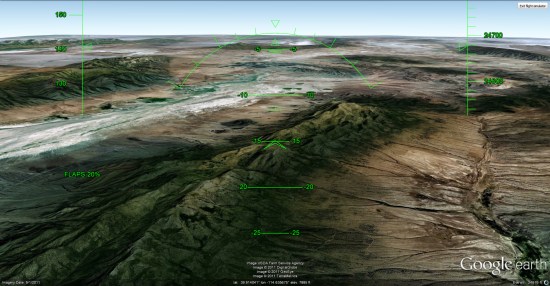
It’s been more than four years since Google first added the flight simulator to Google Earth, and it remains one of the most popular features in Google Earth. As the quality of Google Earth’s imagery, terrain and 3D buildings have improved over the years, it’s helped make the flight simulator experience even better.
 

flight-sim.jpg 

However, that wasn’t enough for user ‘that1anonymousdude’. He’s created a file that will modify your flight sim and let you turn the speed up really high. Using his mod, you can fly up to around 100,000 knots, while keeping solid control, and even fly up into space. It’s quite cool. Here’s a video of it in action:


His program modifies the flight sim config files to allow you to reach these crazy speeds (it doesn’t actually modify the actual Google Earth software). He’s released the source code so you can see how it works, and I’ve scanned it to verify there are no viruses or anything in it. However, always use caution when loading a third-party executable file on your computer.

Google Places Updates

There have been two updates to the Places Quality Guidelines over the past two weeks. On July 21st, with the rollout of the new Places Page look, Google added this paragraph (bold added by me):

You cannot create Places listings for stores which you do not own, but which stock your products. Instead, consider asking the store owner to update their own Places listing with a custom attribute specifying brands or products they stock, including yours. While this data may not appear on the Place page, this information continues to help our system understand more about your business and ensure your organic listings appears and ranks appropriately on Google and Google Maps when potential customers perform searches related to your business.

This is a clear indication that while not displaying the information in the Additional details area of the Places listing they are in fact using the information for relevance and rank in retrieval of the listings and you want to still fill in the extra information.

Google added a paragraph to the Quality Guidelines allowing stores within other stores to explicitly note their relationship with the mall or container store:

Some businesses may be located within a mall or a container store, which is a store that contains another business. If your business is within a container store or mall, and you’d like to include this information in your listing, specify the container store in parentheses in the business name field. For example, Starbucks (inside Safeway).

Osama Bin Laden’s compound in 3D


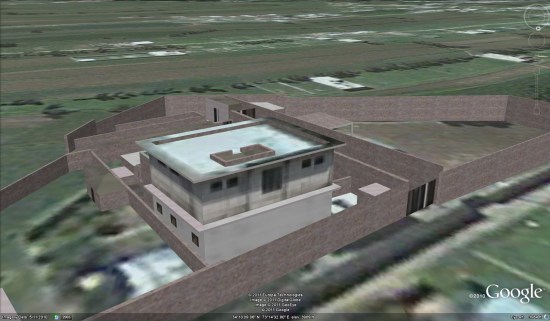
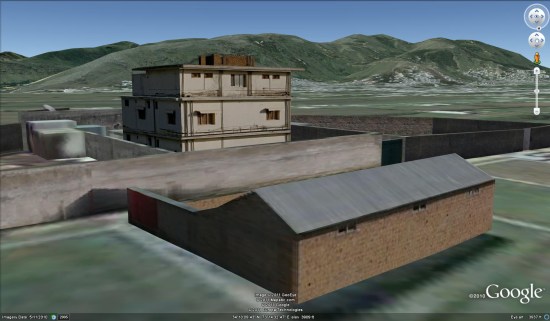
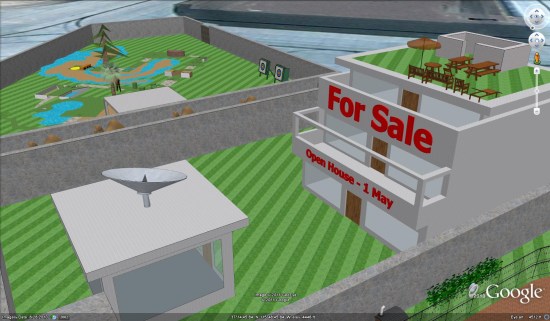
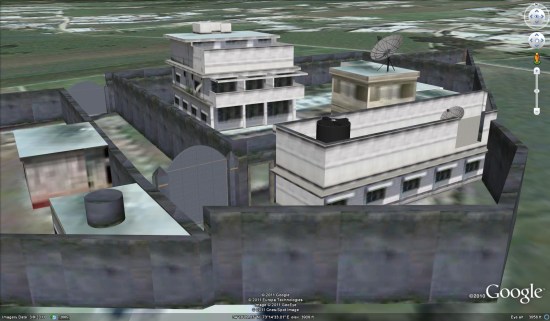
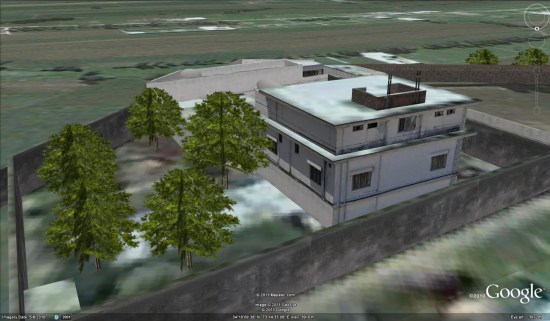
A few days since Osama bin Laden was killed in Abbottabad, Pakistan, and already there are a variety of 3D models of his mansion available in the Google 3D Warehouse. Some are nice renderings, some use very realistic textures, and one is simply meant to be funny. However, all of them show that there are some very talented modelers out there, being able to produce models of this quality in such a short time frame.

Here are some of the best ones, in no particular order:

From J.A. Alvarez | details | KMZ

osama1.jpg 

From Finnian | details | KMZ

osama2.jpg 

From Aerilius | details | KMZ

osama3.jpg 

From timmy | details | KMZ

osama4.jpg 

From Mogens Bregnbaek | details | KMZ

osama5.jpg 

I would assume that Google will post one of them as a default 3D model in Google Earth at some point.

Comer on Your Focus

“Worry about being better; bigger will take care of itself.”

–Gary Comer (1929–2006)

American entrepreneur

founder of Lands’ End

You don’t know everything.

You do know that, don’t you?

Continual learning is a basic necessity to professional improvement and in many cases it’s other people who will help you get there.

But only if you’re coachable. Are you?

To be coachable means to be…

  • Approachable
  • Attentive
  • Receptive
  • Curious
  • Objective
  • Trusting
  • Shapeable
  • Confident

It means you must listen with the intent to learn rather than to show what you know – exactly the type of listening required in the sales process.

Geo Data Quality & Time to Fix

The Baltimore Sun reported on Saturday that Google Maps is erroneously showing the complete Intercounty Connector between I-95 and Gaithershburg Md as being open. Apparently Gogle driving directions are directing drivers along a 12 mile stretch between I-95 and Georgia Ave that still “is largely a muddy track where bulldozers are still doing what bulldozers do”.

This particular case is interesting to me for several reasons.

It is a high profile error in a very densely populated area of the US that has lots of road traffic. The Maps error has been picked up by the Washington Post and the regional NBC affiliate as well as the Baltimore Sun. Coverage of the issue has been persistent with the Baltimore Sun following up on their original reporting on 3/27 noting that 48 hours after reporting the problem to Google the problem is still in Maps.

Clearly, the reporter, Michael Dress of the Sun, thinks that Google should be able to fix the problem in a 2 day timeframe and is dismayed that it remains unrepaired. It is a reasonable expectation to think that a critical mapping error be fixed in 2 day timeframe. Whether Google can or will is another question. Typically they take 30-60 days to act on these corrections.  One of the realities of privatization of essential public services like this is that without strong and enforced regulations, the decisions like these are dictated by profit and not the needs of people. Should a private company that is providing a product for free be held to a higher standard when their product affects public safety in the public realm?

Secondly this story has already achieved a fairly high level of visibility by virtue of being covered in media sources that are very high profile and effectively national in scope. Google, in the past, has held that these types of public exposure have little impact on their willingness and speed to affect changes. Most in the SEO industry have seen obvious examples of “hand jobs” that seems to bely that. This will be an interesting case to test whether Google actually does intervene in these types of cases.

Thirdly and a bigger question is whether the overall quality of the underlying Maps data has improved over the past 12 months. Google stopped using TeleAtlas and started using their own geo data in October of 2009. They implemented a system of end user geo error reporting at the same. In May of last year, Google hired 300 temp workers in the Maps arena to improve the quality. As recently as last September, this reporting system was behind Google’s stated commitment of fixing geo errors in 30 days and there still was some reporting of whole towns going missing.

However since that time, complaints seemed to have dropped. While there have been some problematic and visible examples of large scale geographic map errors, for the most part the quality of the underlying map data seems to have generally improved. This seems to be true in both urban areas and rural areas as well.

Certainly the number of high level complaints on my radar has decreased. It was a common issue that affected visibility of business listings but reports in the Places forum of the problem have declined. Not a perfect proxy of reality but one that should reflect the general direction of the quality of the underlying data as businesses have a very high vested interest in being found and are thus motivated to report the problem. In my anectdotal test of Google’s mapping errors in my home town, most have been fixed.

It has been reported that Google receives over 10,000 corrections an hour to their maps. That’s a million corrections received every 4 days and over 87 million some odd changes every year. Do you think that they actually improved the underlying quality to a level appropriate for business listing accuracy?

Would love to hear your opinions on whether you think that Google has improved the quality of the underlying geo-data over the past year.