Bing Maps now using Nokia Backend services for Traffic and Geocoding

Last year, Microsoft announced a strategic partnership with Nokia in Mapping. Our two companies have spent a lot of time working together, sharing information and investigating better ways provide relevant mapping information to help you find and get to where you’re going more quickly. Today, we’re excited to announce another important phase in that partnership with the launch of Nokia powered traffic results, which are rolling out today in 24 countries on Bing Maps.

The following countries will see improvements through Bing Maps as a result of our use of Nokia services:

· Austria

· Belgium

· Brazil

· Canada

· Finland

· France

· Germany

· Greece

· India

· Indonesia

· Ireland

· Italy

· Luxembourg

· Mexico

· Netherlands

· Poland

· Portugal

· Russia

· Saudi Arabia

· South Africa

· Spain

· Sweden

· Switzerland

· UAE

· United Kingdom

· US


New countries with Traffic

Sao Paulo, Brazil (Resize)

São Paulo, Brazil

Johannesburg, South Africa (resize)

Johannesburg, South Africa

Moscow, Russia (Resize)

Moscow, Russia

Mumbai, India (Resize)

Mumbai, India


Improved Traffic


We’re also improving our existing traffic coverage in the US to include traffic information for side streets in addition to freeway traffic information. See below for enhanced coverage in Seattle.

Seattle Side Street (Resize)

Seattle, Washington

In addition to these traffic improvements, Bing Maps will also start to use Nokia’s geocoding services in a number of countries offering improved directions.  This update, while not always visible to users, is another important milestone in our partnership to build the world’s best mapping platform using Nokia and Microsoft’s assets.

Thanks to our friends at Nokia for their dedication along the way. Together we have enabled a stronger Bing Maps experience and we hope Bing users in these respective countries reap the benefits of our partnership, notice an increase in address search relevance, and enjoy the addition of traffic information – especially those of you in the US who are adventurous enough to travel during the Memorial Day holiday!


The Street View on Russia

Welcome to Russia! You can now virtually travel through the world’s largest country to the cities of Moscow and St. Petersburg using Google Maps Street View.

Take an online stroll around famous Red Square and Moscow Kremlin, or go to outskirts of Moscow to wander around the beautiful Tsaritsino or Kuskovo parks. You can also visit the former site of the palace in Kolomenskoye, once considered the 8th World Wonder.
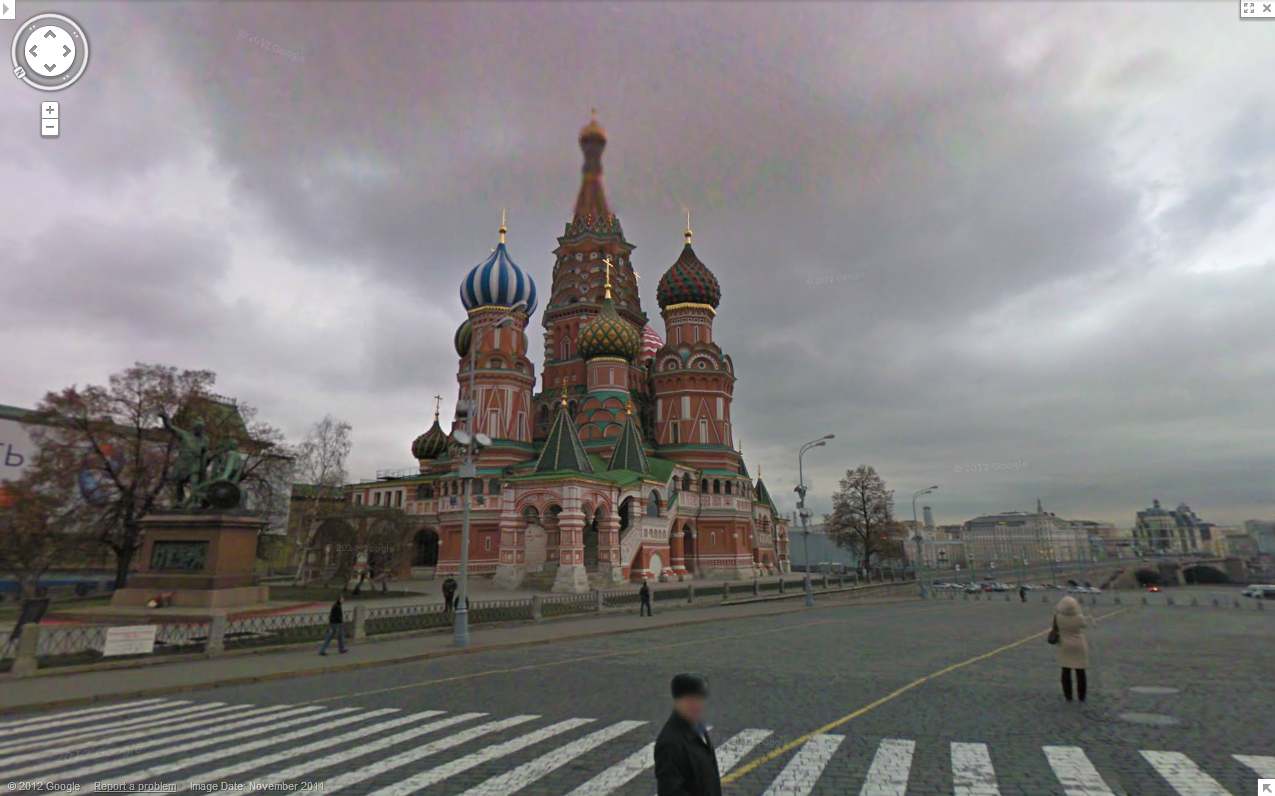

Red Square, Moscow


St. Petersburg, the second largest city in Russia and northernmost megapolis in the world, was once a country capital, and the history of this young city started with The Peter and Paul Fortress. Today, the entire historical center of St. Petersburg is a UNESCO Heritage Site that you can enjoy via Street View.
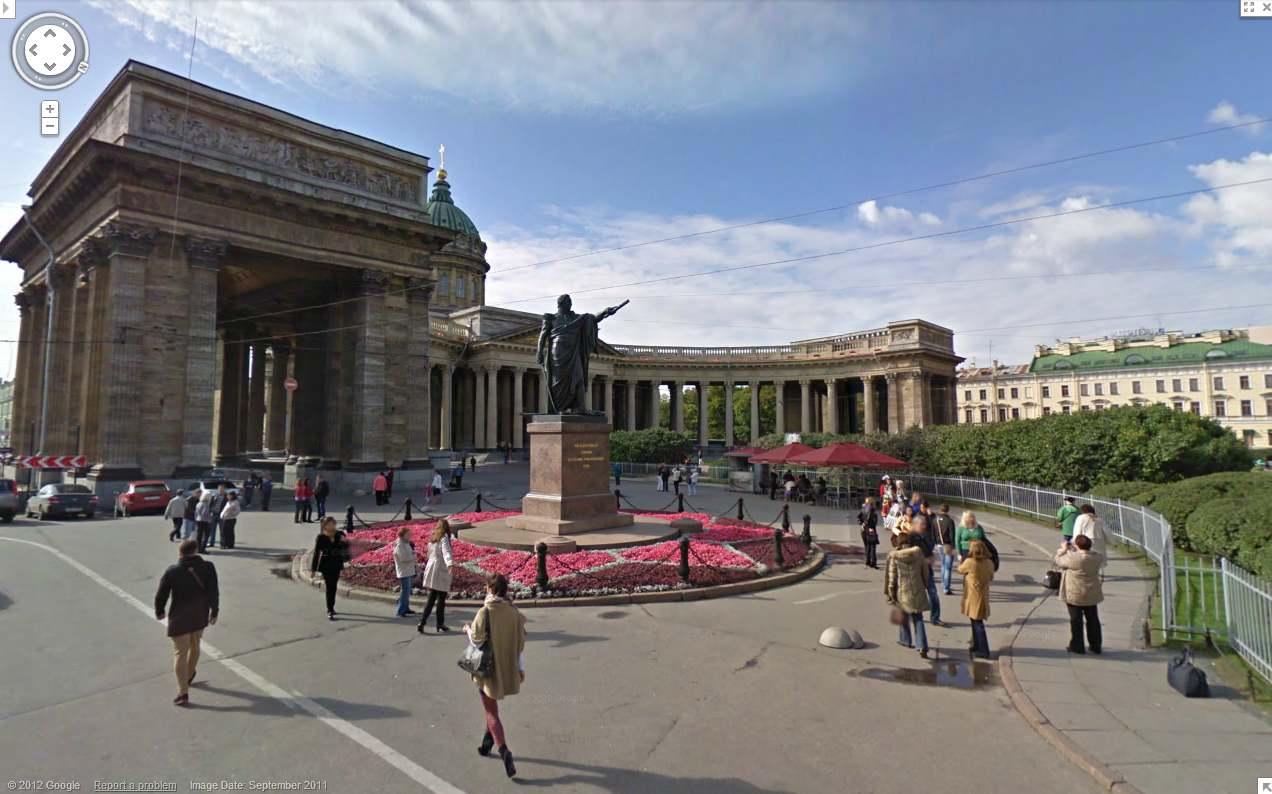

Historical Center, St. Petersburg


Within St. Petersburg, you can see the great palaces and parks that Russian emperors and nobles built, with Peterhof being its crown jewel. In fact, whole southern shore on the Gulf of Finland consists of palaces and parks including Peterhof, the Oranienbaum, and Alexandria.


Peterhof, St. Petersburg

We hope you enjoy your virtual trip to Russia, and look forward to sharing more countries, cultures and sites as Street View continues to expand to more places. For a demo on how Street View works, start here.

Also, if you have a story to share about a place in Russia, find it in Street View and share it on Google+ with the #streetview.

A remarkable Soviet computing pioneer

Sixty years ago today, in the Ukrainian capital of Kyiv, the Soviet Academy of Sciences finally granted formal recognition to Sergey Lebedev’s pioneering MESM project. MESM, a Russian abbreviation for “Small Electronic Calculating Machine,” is regarded as the earliest, fully operational electronic computer in the Soviet Union—and indeed continental Europe.

Recently we were privileged to get a first-hand account of Lebedev’s achievements from Boris Malinovsky, who worked on MESM and is now a leading expert on Soviet-era computing.

Described by some as the “Soviet Alan Turing,” Sergey Lebedev had been thinking about computing as far back as the 1930’s, until interrupted by war. In 1946 he was made director of Kyiv’s Institute of Electrical Engineering. Soon after, stories of “electronic brains” in the West began to circulate and his interest in computing revived.

Sergey Lebedev*

Initially, Lebedev’s superiors were skeptical, and some in his team felt working on a “calculator”—how they thought of a computer—was a step backward compared to electrical and space systems research. Lebedev pressed on regardless, eventually finding funding from the Rocketry department and space to work in a derelict former monastery in Feofania, on the outskirts of Kyiv.

Work on MESM got going properly at the end of 1948 and, considering the challenges, the rate of progress was remarkable. Ukraine was still struggling to recover from the devastation of its occupation during WWII, and many of Kyiv’s buildings lay in ruins. The monastery in Feofania was among the buildings destroyed during the war, so the MESM team had to build their working quarters from scratch—the laboratory, metalworking shop, even the power station that would provide electricity. Although small—just 20 people—the team was extraordinarily committed. They worked in shifts 24 hours a day, and many lived in rooms above the laboratory. (You can listen to a lively account of this time in programme 3 of the BBC’s ”Electronic brains” series.)

MESM and team members in 1951. From left to right: Lev Dashevsky, Zoya Zorina-Rapota, Lidiya Abalyshnikova, Tamara Petsukh, Evgeniy Dedeshko

MESM ran its first program on November 6, 1950, and went into full-time operation in 1951. In 1952, MESM was used for top-secret calculations relating to rocketry and nuclear bombs, and continued to aid the Institute’s research right up to 1957. By then, Lebedev had moved to Moscow to lead the construction of the next generation of Soviet supercomputers, cementing his place as a giant of European computing. As for MESM, it met a more prosaic fate—broken into parts and studied by engineering students in the labs at Kyiv’s Polytechnic Institute.

*All photos thanks to ukrainiancomputing.org.

Single-language labels in Google Maps

If you use Google Maps in English, you might notice we’ve expanded our coverage of translated labels. Previously, map labels would display both transliterated and local names for many places. Using a single language can help users by making the map easier to read. For example, the label for Moscow on our English maps used to display as “Moskva (Москва)”. This was great for learning how places are named in other languages but also resulted in twice as many labels on the map.

Maps with dual language labels (left) and new single-language labels (right)

Below are some nice examples of improvements in Europe and China. Many Italian cities are now labeled with translated English names and China now has province names in English.

Before (left) and single-language labels (right)

We realize it can be useful to see local language labels for learning place names so we’ve kept the option available. If you prefer to see local language labels, you can still do so by unchecking English in the maps menu (move your cursor to the ‘layers’ menu in upper right corner of the map and un-check English when the menu drops down). This is the same for other single-languages which Maps supports. Also note that we may still show multiple labels in some places where there are two local languages or when place names are disputed.

In total, Google now has single-language Maps for 5 major languages – Chinese, Japanese, Korean, Russian, and now English with more languages on their way. We hope this change makes it easier to browse, explore and discover the world around you.

GoogleLatLong