SketchUp 8 M3


There’s been quite a bit going on around SketchUp HQ lately, what with the Trimble thing and the launch of our exciting new SketchUp Showcase and all. But Tyler and the rest of the Engineering gang haven’t just been sitting on their hands, either. Today, they’ve got a fresh new SketchUp maintenance build for you as well. Nothing major, but there’s some good stuff in it.

As usual, you can read all the details here, but for those who just care about the highlights:

  • We’ve fixed some more crashes folks reported in Ruby Observers.
  • Those of you with many Ruby extensions installed should no longer suffer from greyed-out menu items.
  • SketchUp Pro network licenses on Windows now allow multiple instances to run on the same machine at one time.
  • …and the usual collection of performance improvements, security updates and bug fixes.

SketchUp will notify you the next time it checks for an update, but if you just can’t wait, download a fresh install right now.

Bing Maps: A New Look for Pushpins, Popups, and Transit

Bing Maps  just rolled out some exciting new updates to www.bing.com/maps that make it easier for you to find information on the map, explore the layouts of over 850 venues, as well as get to where you’re going with public transit (or transport). Read on to learn more!

Pushpin and Popup refresh

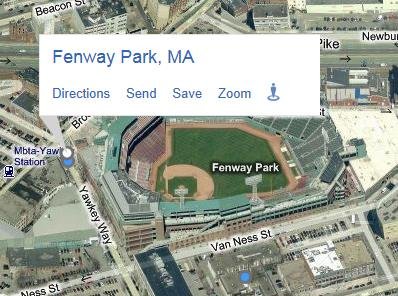
The pushpin. It’s the most common element overlaid on a map. And today, it’s getting an update. In making these changes, to both the pushpin and corresponding popup, our goals were simple: enable you to find the information you want, more quickly and efficiently, while at the same time minimizing obstruction of the map. Let’s take a deeper look at some before and after examples.
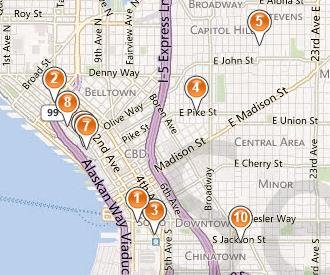
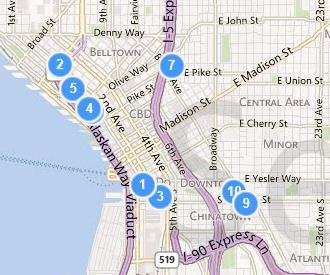
The updated pushpins are designed to better overlay on top of our base map color scheme and make it easier to find results when you perform a search. Search related content appears in blue, while user-generated and saved content (such as “My places”) use an orange colored pin. The contrast changes are more pronounced on hover (and for business searches, the corresponding item in the left-hand panel is adjusted as well), and we’ve also added a new small popup to tell you the name or location or the pin you’re hovering over. Now it’s much easier to quickly scan a bunch of pins to see what they are.
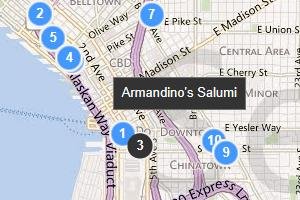
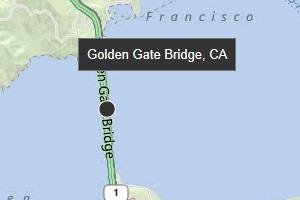


When you click to select a pin, it actually shrinks so as to expose more of the map underneath, and unveil our streamlined popup. Here, we’ve made a number of changes to more compactly display the relevant business or location information and stand out against the backdrop. The most popular actions available for each item have been simplified and consistently placed at the bottom. For most users (except those in the UK), the interaction has changed from a hover-only model to a click-based model for showing the full popup contents. (For users in the UK, where you already had to click to see the popup, we’ve simply added the new smaller hover popup in addition to the layout and style changes.) Overall, these improvements allow you to keep a popup visible while panning/adjusting the map, and even hover over other pins to see what they correspond to, ultimately making it easier for you to find the place you want more efficiently.
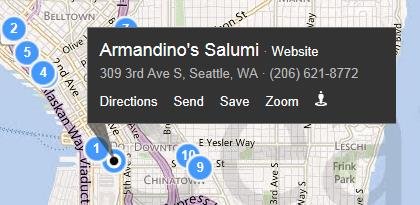
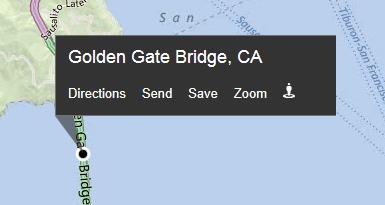
 

One final change you may have noticed is that the pushpins and popups dynamically adjust based on the current map style in order to ensure the information does not get lost on the map.
 

Enhanced Transit Experience

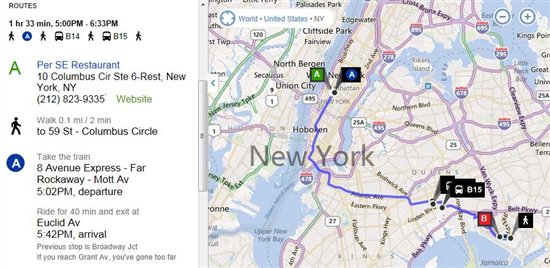
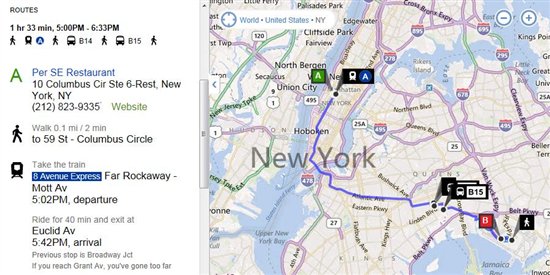
Public transit (and UK transport) users will find a handful of subtle improvements to our directions experience that make it easier to get where you’re going, and make sure you’re on the right line to get there. We’ve changed the way we represent each transit line to better reflect the actual colors and signage used by the line, both for our US and UK markets. You’ll see this reflected both in the on-map waypoints as well as our enhanced directions list.


More sharing options

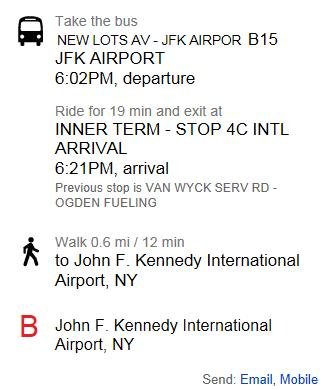
We’ve also extended our ability to send directions to your mobile phone (via SMS) to support transit directions. This functionality is accessible via the “Send: Mobile” link at the bottom of the directions panel. You’ll receive a link on your mobile phone which loads the directions on m.bing.com, and works for all devices which can access m.bing.com (unfortunately, Windows Phone does not currently support transit).
 

Drag to modify your route

Users can now easily modify their directions routes by clicking and dragging on start, end, or waypoints. You’ll see a helpful tooltip appear when you hover over an element that can be adjusted simply by dragging and dropping—and the route will be recalculated automatically!

Explore venues

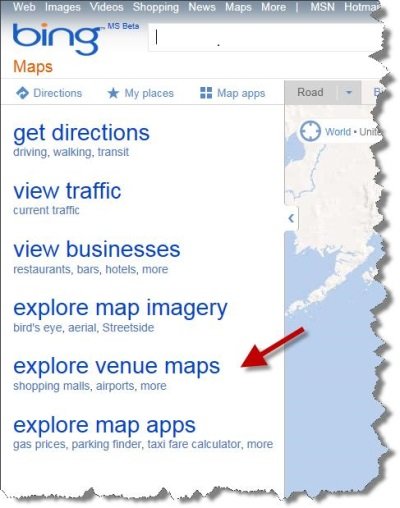
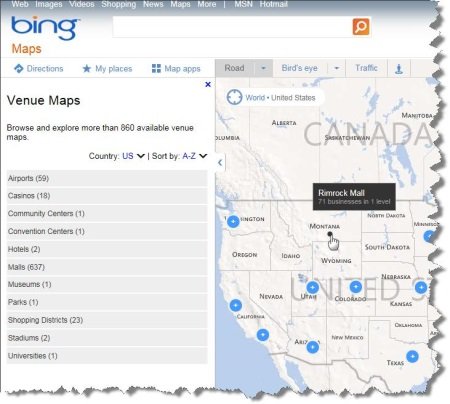
Did you know Bing Maps now has over 850 venue maps of airports, malls, shopping districts, and more? Browsing through them is now easier than ever! Just click on the “explore venue maps” link on Bing Maps, or visitwww.bing.com/maps/venues to get there directly, to browse a categorized listing of available venue maps. You can filter them by country, sort them by location (or alphabetically), and browse through them spatially on the map. If you want to have your venue be part of Bing Venue maps, please contact us for details.
 

We’re excited about this next step in the evolution of our visual design and believe it is a big step forward for simplifying user interaction with the map, and helping users find the information they want quickly and efficiently. We’ll be rolling out these changes to bring consistency across the broader Bing network over the next few weeks.
Unified Map Design of Bing Maps and Nokia

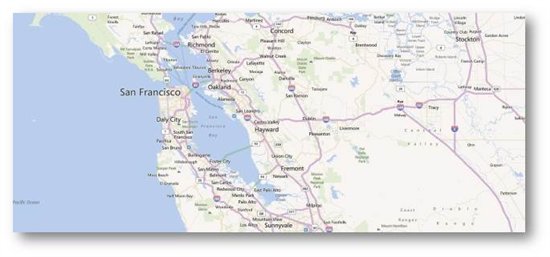
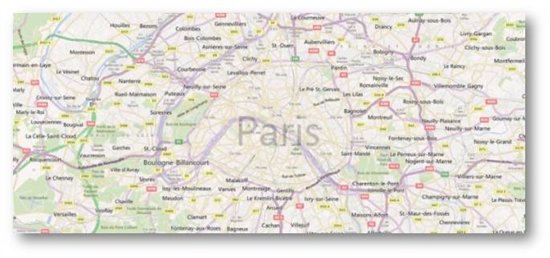
Last year, we entered into a strategic partnership with Nokia which included plans to offer a unique and compelling mapping experience for our customers. Since then we’ve been working with Nokia and Windows Phone to deliver a unified map style based on one set of design principles with the goal of providing a more intuitive and pleasing online mapping experience. Our Bing Maps designers teamed closely with our partners at Nokia Maps and the Windows Phone team to unify our map elements, improve contrast and usability to ultimately create a more beautiful and functional map. Today we’re excited to share the new map design, available on desktop and mobile versions of Bing and Nokia maps.

Let’s take a closer look at the updates.

Common color palette for road map style
We’ve updated our color palette to create a cleaner and consistent view of roads and landmarks resulting in a map that’s easier to interpret. For instance, the new road color is further clarified from rivers while not competing with traffic colors or overlaid information.

Celebrate Typography

We focused significantly on improving various typography components in order to provide further clarity on maps including font updates, improved readability and contextual labeling. Type size hierarchy further delineates classes of labels. The user watches city names consistently grow and become more transparent through the zoom levels. Small type is demystified from its surroundings with a technique that reduces clutter instead of adding glows or ever-present strokes. The right use of typography helps our customers consume mapping details more quickly.

Using Visual Hierarchy to create Focus and maintain context

At each level, there’s an appropriate amount of information conveyed to the user. Too little or too much information can lead to overload and thereby an unpleasant user experience. We’ve redesigned with this in mind, so a very different level of information is presented to you when you zoom compared to when you pan out. Go in for detail, pull back for context. We strive to keep the orientation and context of a user within the map surface persistent across various levels of zoom.

In addition to our map design updates, we’re also adding a significant amount of mapping coverage and data due to our partnership with Nokia and NavTeq. Each map data refresh from NavTeq brings with it many improvements, and each one also attempts to include as many new roads/subdivisions/ changes/etc. as possible.  This update is no exception and the changes are too vast to list but most notably, there are a few entire countries that really improved including Egypt, Israel, Malta, Philippines, Uruguay and Venezuela to name a few.

All in all, we believe that the new map styles available on Bing Maps (http://www.bing.com/maps) and Nokia Maps (http://maps.nokia.com) and on your mobile device are easy, satisfying, and truly a delight to use.

Very important update for SketchUp 8

In the world of software, the designation “M2” refers to “Maintenance Release #2”. Maintenance releases are mini-versions that come out between major updates. They aren’t really about flashy new features; they’re more like tune-ups for your car; squeaks and rattles get fixes, tires are rotated, fluids are changed. You get the picture.

It’s been a few months since we released M1; since then, we’ve collected a fresh batch of performance tweaks and bug fixes—over 150 of them, in fact. M2 is a free update for all users of SketchUp 8 and SketchUp Pro 8 in all 12 languages. The best way to get it is to open SketchUp and do this:

Windows: Choose Help > Check for Update
Mac: Choose SketchUp > Check Web for Update

Having stated that maintenance releases aren’t always flashy, we couldn’t resist adding a few shiny, new things that we think you’ll appreciate:

Better Ruby Script Installation

We’ve had a way for other folks to build SketchUp plugins and extensions for years. Anyone with coding skills can use the Ruby API (application programming interface) to whip up new tools that they can distribute any way they like. People have created thousands of great scripts—we consider the API one of the most useful things we’ve done.

The tricky part has always been teaching SketchUp modelers how to install and access the Ruby scripts (Rubies) that they want to use. Adding a sophisticated Ruby used to involve finding a specific folder on your system and putting a bunch of files in all the right places. Try explaining how to do that to your boss.

The Extensions panel in SketchUp Preferences has a new button…


In SketchUp 8 M2, we’ve added two features that should make using Rubies a whole lot easier: The first is a new button on the Extensions panel in SketchUp Preferences. Clicking it lets you install any properly-configured “.RBZ” (ruby zip) file, which puts the needed files into the correct spot, without having to dig around in your computer’s file system. It’s simple, but huge. We’ve also added a lightweight set of “hooks” in the API that should help scripters build their own script-management tools.

Better COLLADA

All versions of SketchUp 8 can read and write COLLADA, a 3D file format that works with lots of other 3D software. It’s managed by the Khronos Group, an industry consortium that decides which features COLLADA should support. As of M2, SketchUp’s import/export support for COLLADA is now compliant with over 90% of the official Khronos compatibility test suite, only leaving out support for animations and shaders—neither of which can be authored in SketchUp anyway.

We think you’ll like SketchUp 8 M2’s ability to seamlessly import and export clean and compliant COLLADA geometry. One particular thing to note: SketchUp now preserves texture names in exported files. This makes it easier to work with COLLADA files in 3rd party rendering tools.

Advanced Camera Tools included in Pro

Back in March, we announced the Advanced Camera Tools for SketchUp Pro 8. The ACTs let set designers, cinematographers, storyboard artists and other people in the entertainment industry work with simulated real-world cameras in their SketchUp models. Until now, the ACTs were a separate plugin that you had to install. In M2, they’re built right into every copy of SketchUp Pro 8.

More Straightforward Pro Trials

After you download and install SketchUp Pro, you can try all of the Pro features for 8 hours (of use) before deciding to buy a license. Up until now, we’ve simply switched off the Pro stuff if you don’t enter a license after the trial period. Effectively, Pro reverted to being just like regular ol’ SketchUp.

The problem was that lots of people didn’t realize that they weren’t actually running Pro anymore. Even worse, folks who had bought Pro licenses and had forgotten (or otherwise been unable) to activate those licenses were missing out on all the great stuff they’d paid for. Our Pro Support team has been fielding dozens of “Why can’t I import a CAD file?” questions per day. It’s been a bit of a mess.

Starting with SketchUp 8 M2, the SketchUp Pro Trial will no longer revert to “free mode” when the trial period expires. A separate version of SketchUp will still be available to download for free, but SketchUp Pro will require a valid license file to run after your trial period has expired.

Mac OS 10.7 Compatibility

Users of Apple’s latest operating system, take note: SketchUp 8 is fully compatible with your hardware. And I ain’t lion. Rawr.

The New Bing Maps Features


Coming back after the holiday season with a lot of energy, the Bing Maps team kicked off 2012 with releases of a new routing engine and the WPF control. Today–only 2 weeks later–we are now announcing several new features in the Bing Spatial Data Services and the Bing Maps Account Center. New features include a data source for traffic incidents, the ability to find points of interest (POI) along a route, wildcard-searches in your POI, incremental updates of POI data sources, improved reporting and more. Happy New Year! Are you feeling the love? Smile

The Bing Spatial Data Services provide a REST interface that allows you to geocode or reverse-geocode your own POI data sources in batch-mode, manage these data sources and query your own or some public POI data sources that Bing Maps provides in a spatial context.

Finding Traffic Incidents Along a Route using the new Spatial Data Services Query

In this release, we added the following features:

  1. Incremental Upload - Your own data sources now support incremental updates by setting the parameter ‘loadOperation’ in the Data Source Management API to ‘incremental’. So, once you’ve uploaded a data source of X number of locations into the Spatial Data Service, if you just want to add a few records you can just send those few records. We’ll handle the add and update functions for you!
  2. Wildcard Searches - New Query Options support wildcard searches through filter criteria. Let’s say you want to query your data source to find the nearest locations around a point AND you want to filter the results based on the beginning or end of a keyword. For example, let’s say you have a “Store Manager” field in your data source. You can look for said manager by last name, “%Smith” or first name “John%” so you get all the Smiths or Johns within a region.
  3. Traffic Incidents - Traffic Incidents for North America are now available as a public POI data source and can be accessed through the Query API. Now the traffic incidents you see on Bing Maps are available to you in your applications via a spatial query.
  4. Find Near Route - The Bing Spatial Data Service supports now an additional spatialFilter which allows you to search for POI along a route. This is a game changer. Let’s say you’re a coffee company and you want to empower your users to have the ability find all your locations along their drive from, say Seattle to San Francisco…now you can! The Find Near Route Feature allows you to spatially query the points you’ve uploaded into SDS within a 1 mile buffer of your route.

http:// spatial.virtualearth.net /REST/v1/data/
439698230d90496596083f3fe7aafeb2/
TrafficIncidents/
TrafficIncident
?key=[YOUR_BING_MAPS_KEY]
&$format=json
&jsonp=callbackFindTrafficIncidentsNearRoute
&spatialFilter=nearRoute(’47.678558349609375,-122.13098907470703′,
’47.60356140136719,-122.32943725585937′)

You will find a complete sample using the Bing Maps AJAX Control version 7 for visualization, the DirectionsManager class for driving directions, the TrafficLayer class for traffic-flow information and the Bing Spatial Data Services for traffic-incident information along a route here. Alternate versions of the SDK are available in PDF and .chm format, as well.

Note: Neither the Wildcard-search nor the spatial-filter ‘nearRoute’ are supported with the public data sources NAVTEQNA and NAVTEQEU.

The Bing Maps Account Center is the portal through which you can find information for development with Bing Maps, and also manage your account. It contains links to interactive and traditional SDKs, a facility to generate Bing Maps Keys, a web user interface to manage your own POI data sources and a reporting service through which you can retrieve statistics about your Bing Maps usage.

In this latest release we added the following features.

  1. Additional data validation has been introduced for the upload of your own POI data sources.
  2. Before it was already possible to add and edit records in a data source that you uploaded through the portal. You can now also download and delete data sources.M32small
  3. Image capturing adds now additional security during the generation of Bing Maps Keys.M33small
  4. Additional reports have been added to provide more details on the use of specific Bing Maps Keys.M34small

We certainly hope you’re feeling special (and spatial!). We’re investing quite a bit of energy into Bing Maps and hope to see some killer apps.