Bing Maps now using Nokia Backend services for Traffic and Geocoding

Last year, Microsoft announced a strategic partnership with Nokia in Mapping. Our two companies have spent a lot of time working together, sharing information and investigating better ways provide relevant mapping information to help you find and get to where you’re going more quickly. Today, we’re excited to announce another important phase in that partnership with the launch of Nokia powered traffic results, which are rolling out today in 24 countries on Bing Maps.

The following countries will see improvements through Bing Maps as a result of our use of Nokia services:

· Austria

· Belgium

· Brazil

· Canada

· Finland

· France

· Germany

· Greece

· India

· Indonesia

· Ireland

· Italy

· Luxembourg

· Mexico

· Netherlands

· Poland

· Portugal

· Russia

· Saudi Arabia

· South Africa

· Spain

· Sweden

· Switzerland

· UAE

· United Kingdom

· US


New countries with Traffic

Sao Paulo, Brazil (Resize)

São Paulo, Brazil

Johannesburg, South Africa (resize)

Johannesburg, South Africa

Moscow, Russia (Resize)

Moscow, Russia

Mumbai, India (Resize)

Mumbai, India


Improved Traffic


We’re also improving our existing traffic coverage in the US to include traffic information for side streets in addition to freeway traffic information. See below for enhanced coverage in Seattle.

Seattle Side Street (Resize)

Seattle, Washington

In addition to these traffic improvements, Bing Maps will also start to use Nokia’s geocoding services in a number of countries offering improved directions.  This update, while not always visible to users, is another important milestone in our partnership to build the world’s best mapping platform using Nokia and Microsoft’s assets.

Thanks to our friends at Nokia for their dedication along the way. Together we have enabled a stronger Bing Maps experience and we hope Bing users in these respective countries reap the benefits of our partnership, notice an increase in address search relevance, and enjoy the addition of traffic information – especially those of you in the US who are adventurous enough to travel during the Memorial Day holiday!
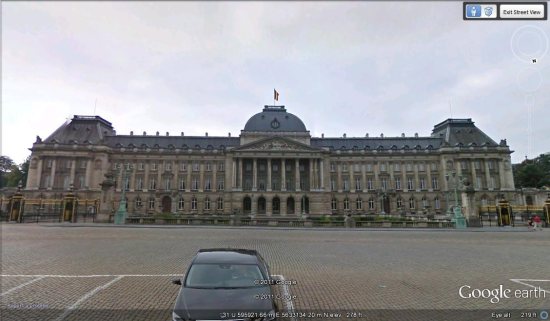
 

Street View imagery in Belgium


Along with the ski resorts , Google has now pushed out new Street View imagery across Belgium.


belgium.jpg 

The coverage in Belgium is remarkably comprehensive, with virtually every road now viewable in Street View. To see it for yourself, just search for “Belgium” in Google Earth, then drag the peg man on to the map.

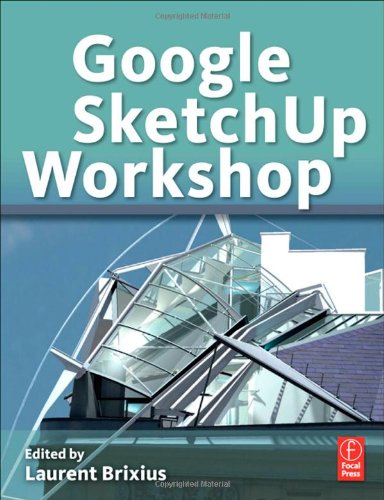
New book: Google SketchUp Workshop

When it comes to instructions for building your first house, or your first bench, or your first Google Earth model, there is no shortage of available materials. But what happens after you’re a SketchUp rockstar? Where are all the tomes full of delicious inspiration for those of us who have mastered inference locking and nested section planes and scene properties? It’s all fine and well to read about how SketchUp works, but real progress comes from peeking over our peers’ shoulders to see what they’re working on.

And that’s exactly the concept behind Laurent Brixius’ brilliant new book Google SketchUp Workshop. Translated from the original “Créer avec SketchUp” (originally published a few years ago in French) this full-color volume presents sixteen beautifully illustrated case studies authored by expert SketchUp users from a multitude of different disciplines. Each one includes high-level workflows, tips and techniques for using SketchUp in a different field of design. Architecture, urban design, engineering, process plant design, woodworking, theater set design and architectural graphics are all represented.

Our friends over at SketchUpArtists.org conducted a nice interview with Laurent (the book’s editor) before the English edition came out. An architect, architectural 3D artist and author from Belgium, he’s done an amazing job of assembling a collection of projects that are pure inspiration. This is a book that belongs on the shelf of every SketchUp aficionado.

Google I/O extends virtually around the world

In celebration of Google I/O 2011, many Google offices around the world, as well as GTUG partners and Student Ambassadors, are hosting free viewing parties of Google I/O sessions. If you can’t attend Google I/O in person, these events are a way to connect with other talented developers and watch live feeds of the conference.

Part viewing party and part community building, Google I/O Extended events are free and worldwide, focused on bringing the developer community together to live-stream the keynote and other major sessions of Google I/O. Each location’s event will be a little different, so check the registration page of the closest location to see what they have planned. With limited space, registration is required. Learn more and find an I/O Extended event near you on the I/O Extended site. These events are being organized by local developer community leaders and university ambassadors, so please reach out to them specifically if you have any questions about the details.

Here are just a few of the locations hosting an I/O Extended event:

Africa

Asia

Europe

North America

South America and Central America

See more locations on the map and register for a Google I/O Extended event in your area.

We look forward to having you join us for Google I/O Extended!

In Africa, citizen cartographers tell their stories through their maps


Earlier this month, we invited 60 of Google Map Maker’s top users in Africa to a community workshop in Nairobi. The event celebrated the contributions of exceptional mappers from across Africa who have collectively mapped hundreds of thousands of roads, cities and buildings, covering more than half the population in Africa. Participants from places including Burkina Faso, the Democratic Republic of Congo, Ethiopia, Gambia, Kenya, Morocco, Uganda, Rwanda, and Tanzania came together for this unique and inspiring opportunity to tell their stories, learn from each other, and share their mapping experiences using Google Map Maker. Check out the the Super Mappers Conference site for more details.


Meeting these passionate online mappers inspired all of us to think not only about creating maps to fulfill a practical need, but also about why we map and the deeply personal stories a map can tell. During these two days, we traveled to places that we perhaps may never see in person, but now mean more to us when we see them on a map because of the stories of mappers such as Noé Diakubama.

Noé grew up in the Democratic Republic of Congo (formerly Zaire), a country that has suffered many years at war. He is now living in Belgium and proud to give back to his country and people via mapping.

His mapping story began in Mbandaka, where he grew up. Noé liked to walk. Walking was about exploration and discovery. And Noé had many places to go, including secret spots to find wild vegetables and the EALA botanical garden. But without a map it was easy to get lost, so he could never wander too far from home. With his uncle, Noé sketched a small paper illustration of Mbandaka and its landmarks – that was his first experience with mapping! A few years later, he was surprised to find Mbandaka poorly represented on Google Maps; it only showed the city airport and two roads. Using Google Map Maker, he began mapping the roads by himself, and then asked friends and family to help him with adding local roads, their names and so on. Together, they created the first map ever of Mbandaka!


When I asked Noé why he maps, he replied:

Everyday, I spend hours and hours in front of my computer… mapping. My rewards include seeing a smile on the face of someone who sees for the first time the name of his/her street on the Internet, and knowing that someone benefited from the maps I created – kids journeying in the neighborhoods, business owners, or tourists. And ultimately, I want to see Africa being mapped and these maps made accessible to everyone. My message to other Africans: don’t be just a spectator, let’s all share our knowledge and start mapping cities and remote areas. We will soon, together, complete the mapping of our continent!

I’m used to seeing maps and thinking of them as a collection of edits or points of interests. It was an incredible feeling to personally meet and interact with the people behind the creation of the many dots on our maps. This was a gentle and welcome reminder that maps are not static. They’re alive, they’re personal, and they tell the stories of the people who create them. Mapping allows each of us to be a driving force for change and growth in both our immediate communities and the rest of the world. Let’s continue mapping, let’s stay connected through the Map Your World Community, and let’s continue doing amazing things together!

Posted by France Lamy, Program Manager, Google.org