How Google Earth is being used by the Philippine National Police


Over the years, Google Earth has been responsible for helping a huge number of non-profit and other worthwhile organizations around the world. We’ve shown you how environmental groups have been using Google Earth for more than six years, how it’s been used to fight against rainforest logging, and Google Earth Outreach consistenly showcases many other amazing organizations from a variety of countries.

Similarly to the others that have used Google Earth to fight against deforestation, the Philippine National Police have been using Google Earth to fight illegal logging in the province of Laguna.
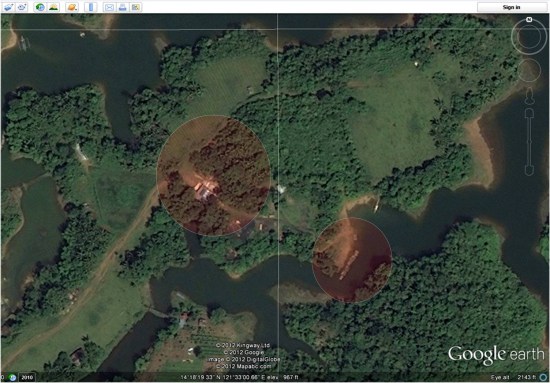
 

map2.jpg 

Here is their story, in their words:

On behalf of all the personnel of Philippine National Police (PNP) Laguna, I would like to express our gratefulness for the wonderful gift of your Google Earth services. It contributed a lot and it has been a great part of our efforts against illegal logging here in the province of Laguna. Nationwide, we are shocked by the effect of the natural and man-made calamities wreaking havoc to our country resulting to loss of lives and properties. Man-made calamities are greatly attributed to rampant illegal logging and deforestation thus causing flash floods and landslides. Since Laguna had been one of the most affected areas of flash floods and landslides, the Laguna PNP initiated the creation of a dedicated Provincial Anti-Illegal Logging Task Group “BERDE” purposely to ensure the implementation of OPLAN “BERDE (Boost Economic Reserves for the Development of Ecosystem). Through the help of Google Earth, we were able to locate specific targets of our OPLAN BERDE. Our operations yielded positive results on illegal logging sites like Cavinti, Laguna that was identified by using Google Earth. Initial operation last April 13, 2012 resulted to the recovery of forest products, machinery equipment, tools and conveyance abandoned during apprehension. Google Earth has been a major contributing factor to the success of our operation. Because of you and your innovative services, we can keep moving forward towards the attainment of our goals in the field of law enforcement.

As Google Earth imagery continues to become higher resolution and update more rapidly, it will become an even more useful tool for organizations like this one.

 

Picture4.jpg 


Leonardo on Avoiding Mediocrity


Iron rusts from disuse; stagnant water loses its purity and in cold weather becomes frozen; even so does inaction sap the vigor
of the mind.”

- Leonardo da Vinci (1452–1519)

Italian painter, sculptor, and inventor

How are you kicking off your salesday?

Are you preparing your mind with solid thought, information, and support? Are you allowing the right radio or TV personalities to get you ready? The right news or material? The right people
at the office?

Be careful to what you give your attention. It all has an influence on you.

Google Plugin for Eclipse 2.5

Since Google added SQL support to App Engine in the form of Google Cloud SQL, the Google Plugin for Eclipse (GPE) team has been working hard on improving the developer experience for developing App Engine apps that can use a Cloud SQL instance as the backing database.

They are pleased to announce the availability of Google Plugin for Eclipse 2.5. GPE 2.5 simplifies app development by eliminating the need for manual tasks like copying Cloud JDBC drivers, setting classpaths, typing in JDBC URLs or filling in JVM arguments for connecting to local/remote database instances.

GPE 2.5 provides support for:

  • Configuring Cloud SQL/MySQL instances
  • Auto-completion for JDBC URLs
  • Creating database connections in Eclipse database development perspective
  • OAuth 2.0 for authentication.

Configuring Cloud SQL/MySQL instances
App Engine provides a local development environment in which you can develop and test your application before deploying to App Engine. With GPE 2.5, you now have the ability to configure your local development server to use a local MySQL instance or a Cloud SQL instance for testing. When you choose to deploy your app, it will use the configured Cloud SQL instance for App Engine.

Auto-completion for JDBC URLs
GPE 2.5 supports auto-completion for JDBC URLs, and quick-fix suggestions for incorrect JDBC URLs.

Creating database connections in Eclipse database development perspective
The Eclipse database development perspective can be used to configure database connections, browse the schema and execute SQL statements on your database.

Using GPE 2.5, database connections are automatically configured in the Eclipse database development perspective for the Development SQL instance and the App Engine SQL instance.

You can also choose to manually create a new database connection for a Cloud SQL instance. In GPE 2.5, we have added a new connection profile for Cloud SQL.

GPE 2.5 now uses OAuth 2.0 (earlier versions were using OAuth 1.0)  to securely access Google services (including Cloud SQL) from GPE. OAuth 2.0 is the latest version of the OAuth protocol focussing on simplicity of client development.

Can’t wait to get started?
Download GPE here and write your first App Engine and Cloud SQL application using GPE by following the instructions here.

Google hope GPE 2.5 will make cloud application development using App Engine and Cloud SQL a breeze. We always love to hear your feedback and the GPE group is a great place to share your thoughts.

Jung on Who You Are


“Everything that irritates us
about others can lead us to an understanding of ourselves.

– Carl Jung (1875–1961)

Swiss psychiatrist

Thou shall not interrupt or talk over a prospect or customer.

Have you ever considered how ridiculous it is to do this?

Why does it happen? It could be the excitement of how well your offering meets their need, poor listening training, ego (Let me show you what I know instead of learning what you need!), or just plain rudeness.

Here’s an idea…

When you and your team are talking with your prospects and customers, be sure to drop a small gap of silence in between what they say… and your response – just an extra second or so.

Do it when you’re asking your questions about their challenges and needs and in general conversation. Not only will it improve your rapport, but in many cases, you’ll also enjoy the extra information you learn when the other person continues to talk.

This is thoughtful listening and one of the surest ways to make a better connection with your prospects and customers.

Practice it with your team in your daily discussions. Practice it with your friends and family in your personal discussions.

In your sales efforts, make it your habit.

You’ll be amazed at what you learn.

The R programming language


The R programming language has become one of the standard tools for statistical data analysis and visualization, and is widely used by Google and many others. The language includes extensive support for working with vectors of integers, numerics (doubles), and many other types, but has lacked support for 64-bit integers. Romain Francois has recently uploaded the int64 package to CRAN as well as updated versions of the Rcpp and RProtobuf packages to make use of this package. Inside Google, this is important when interacting with other engineering systems such as Dremel and Protocol Buffers, where our engineers and quantitative analysts often need to read in 64-bit quantities from a datastore and perform statistical analysis inside R.

Romain has taken the approach of storing int64 vectors as S4 objects with a pair of R’s default 32-bit integers to store the high and low-order bits. Almost all of the standard arithmetic operations built into the R language have been extended to work with this new class. The design is such that the necessary bit-artihmetic is done behind the scenes in high-performance C++ code, but the higher-level R functions work transparently. This means, for example, that you can:

• Perform arithmetic operations between 64-bit operands or between int64 objects and integer or numeric types in R.
• Read and write CSV files including 64-bit values by specifying int64 as a colClasses argument to read.csv and write.csv (with int64 version 1.1).
• Load and save 64-bit types with the built-in serialization methods of R.
• Compute summary statistics of int64 vectors, such as max, min, range, sum, and the other standard R functions in the Summary Group Generic

For even higher levels of precision, there is also the venerable and powerful GNU Multiple Precision Arithmetic Library and the R GMP package on CRAN, although Romain’s new int64 package is a better fit for the 64-bit case.

We’ve had to work around the lack of 64-bit integers in R for several years at Google. And after several discussions with Romain, we were very happy to be able to fund his development of this package to solve the problem not just for us, but for the broader open-source community as well.